Illinois Higher Education Equity Symposium
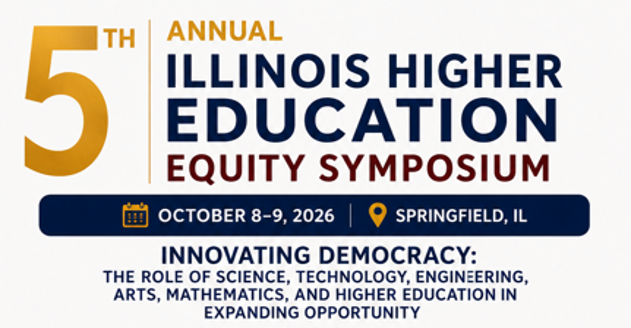

Symposium Details
Dates: October 8-9, 2026
Times:
Thursday, October 8: 1-5PM/Networking Reception- 6-7:30PM
Friday, October 9: 8AM-12N with Closing Luncheon
Location:
Edgar J. Curtis Memorial Learning Center, Springfield, Illinois
Free parking available
Special Presentation Attendance Only
Sarah Lewis, Ph.D- John L. Loeb Associate Professor of the Humanities and Associate Professor of African and African American Studies at Harvard University
Time:
Friday, October 9: 9AM to 10:15AM
Why this Symposium Matters
While Illinois has made significant progress in expanding access to higher education, substantial disparities in educational attainment and workforce opportunity remain. According to the Illinois Board of Higher Education (IBHE), public university enrollment reached its highest level in a decade during the 2025-26 academic year, with total enrollment increasing 2.3% to 189,791 students statewide. First-time freshman enrollment increased 6.8%, transfer enrollment increased 6.5%, and fall-to-fall retention increased 1.4%. Enrollment growth has also been observed among historically underrepresented populations. African American enrollment at Illinois public universities increased from 20,962 students in 2024 to 23,001 students in 2025, representing a 9.7% increase, while Latino student enrollment also continued to rise.
Despite these encouraging gains, Illinois continues to face significant equity and attainment challenges. Large gaps persist in bachelor's degree attainment, college completion, and participation in high-demand fields such as science, technology, engineering, healthcare, and advanced manufacturing. Students from low-income families, rural communities, and historically underserved populations remain less likely to earn postsecondary credentials and more likely to encounter barriers to advanced coursework, dual-credit opportunities, digital access, and emerging technology pathways. These disparities carry significant economic consequences as employers increasingly seek workers with skills in artificial intelligence, data analytics, healthcare innovation, cybersecurity, engineering, and other rapidly growing sectors.
At the same time, demographic shifts and workforce shortages are reshaping the state's future. Illinois must increase educational attainment among all populations to meet workforce demands and remain economically competitive. As technological innovation accelerates, ensuring equitable access to STEAM education, research opportunities, entrepreneurship, and digital literacy is no longer solely an educational priority; it is an economic, civic, and democratic imperative. Higher education institutions, policymakers, business leaders, and community organizations must work together to ensure that innovation expands opportunity for all Illinoisans rather than deepening existing divides.
Illinois and National Challenges Requiring Action
- Illinois' goal is for 60% of adults ages 25-64 to hold a high-quality postsecondary credential by 2025 (the state's "60 by 25" initiative).
- Rural Illinois counties continue to lag urban counties in bachelor's degree attainment.
- Hundreds of thousands of Illinois adults have some college credit but no degree. Educational attainment remains uneven across race, income, and geography.
- STEM occupations are projected to grow faster than many other sectors while underrepresentation persists among Black, Latino, rural, and low-income populations.
- Artificial intelligence and automation are transforming workforce demands faster than many educational systems can adapt.
- Access to AI literacy, digital infrastructure, and technology training remains uneven across communities.
- Civic trust, democratic engagement, and public problem-solving increasingly require citizens who can critically evaluate information, technology, and public policy.
Join Higher Education Leaders from Across Illinois for Conversations on:
✔ Student Success and Postsecondary Attainment
✔ Artificial Intelligence, Ethics, and Emerging Technologies
✔ Workforce Innovation and Economic Mobility
✔ Arts, Creativity, and Human-Centered Design
✔ STEM and Healthcare Innovation
✔ Public Policy and Democracy
✔ Civic Responsibility and Community Engagement
✔ Rural Opportunity and Regional Development
✔ Digital Literacy and Future Workforce Readiness
✔ Systemic Transformation and Institutional Leadership
Together, we can explore how innovation, education, and democratic engagement can work in partnership to create a more prosperous, equitable, and opportunity-rich future for Illinois and the nation.”
Symposium Presenter
Opening Keynote • October 8 | Derek Hoiem, Ph.D. - Professor in the Siebel School of Computing and Data Science at the University of Illinois Urbana-Champaign
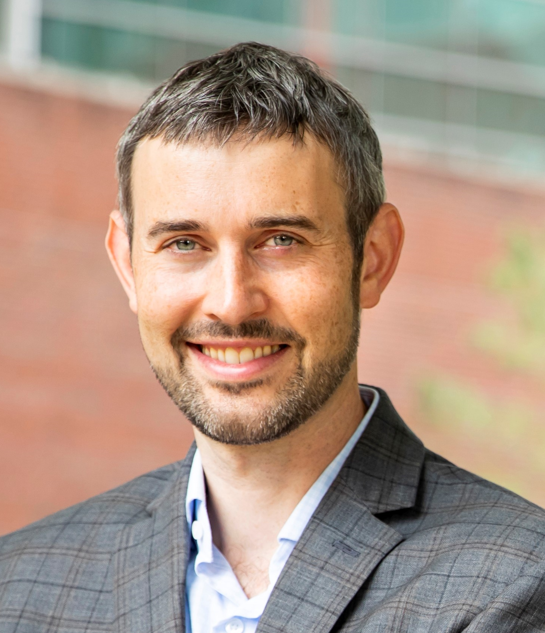 Derek Hoiem is a Professor in the Siebel School of Computing and Data Science at the University of Illinois Urbana-Champaign, where he is active in AI teaching, research, entrepreneurship, and administration. Most recently, he has been leading efforts to develop a comprehensive plan for AI education and to enable AI readiness across the state, with roles including Associate Director for AI Strategy and Programs in the Siebel School, Grainger Dean's Fellow for AI Education, and chair/co-chair of the AI curriculum task forces for The Grainger College of Engineering and the Urbana-Champaign campus. An IEEE Fellow, his research investigates how to create systems that continue to improve and are physically intelligent; awards include a Sloan Research Fellowship, the IEEE PAMI Young Researcher Award, and best paper awards. Prof. Hoiem is also co-founder and Chief Science Officer of Reconstruct, which provides construction stakeholders with an AI-based Visual Command Center for timely access to project information.
Closing Keynote • October 8 | Dr. Kamau Bobb, Ph.D. — Founding Senior Director, Constellations Center for Equity in Computing, Georgia Tech | Author of The Bullwhip’s Algorithm | Book Signing to Follow
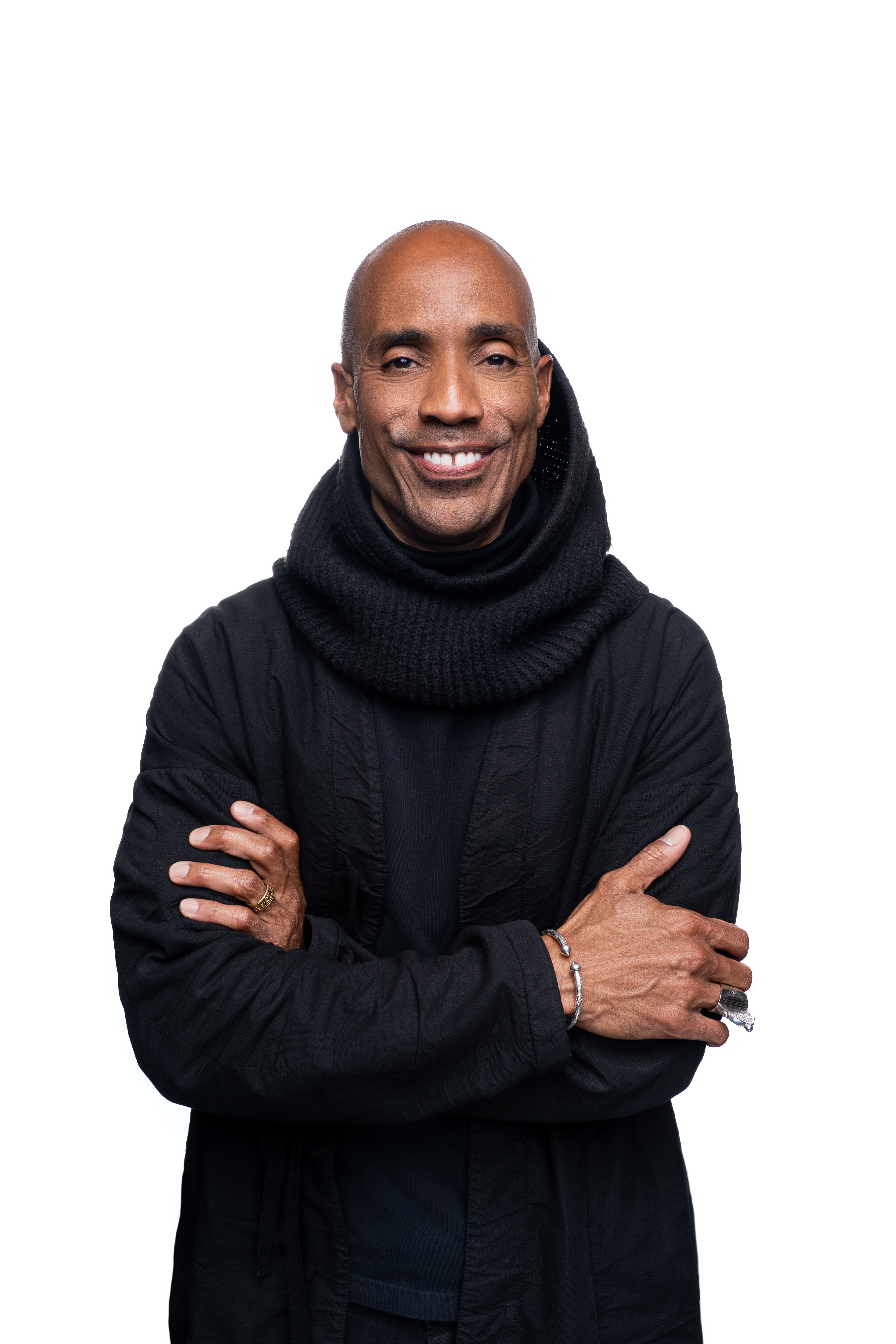 Dr. Kamau Bobb is the founding Senior Director of the Constellations Center for Education in Computing at Georgia Tech. An engineer and science and technology policy scholar, his work focuses on STEM education, large educational systems, technology, and the structural conditions that shape contemporary American life.
Prior to his leadership at Georgia Tech, Dr. Bobb served as Director of STEM Education Strategy and Research at Google and as a Program Officer at the National Science Foundation within the Directorate for Computer and Information Science and Engineering. During his federal service, he served on President Barack Obama’s My Brother’s Keeper (MBK) STEM Taskforce. He previously directed the STEM Initiative for the University System of Georgia.
Dr. Bobb earned a Ph.D. in Science and Technology Policy from Georgia Tech, as well as M.S. and B.S. degrees in Mechanical Engineering from the University of California, Berkeley. His career reflects a longstanding commitment to expanding access to computing and STEM education and examining how technology can contribute to greater educational opportunity and equity.
Dr. Bobb is also the author of The Bullwhip’s Algorithm: Artificial Intelligence and America’s Racial Caste System, forthcoming from Beacon Press on October 20, 2026. The book examines the intersection of artificial intelligence, education, race, technology, and equity, asking critical questions about how AI may reshape American education and whether emerging technologies can truly advance educational opportunity.
Through his scholarship, leadership, and public engagement, Dr. Bobb brings an important perspective to conversations about the future of computing, education, artificial intelligence, and equity.
Opening Keynote • October 9 | Sarah Lewis, Ph.D. -John L. Loeb Associate Professor of the Humanities and Associate Professor of African and African American Studies, Harvard University
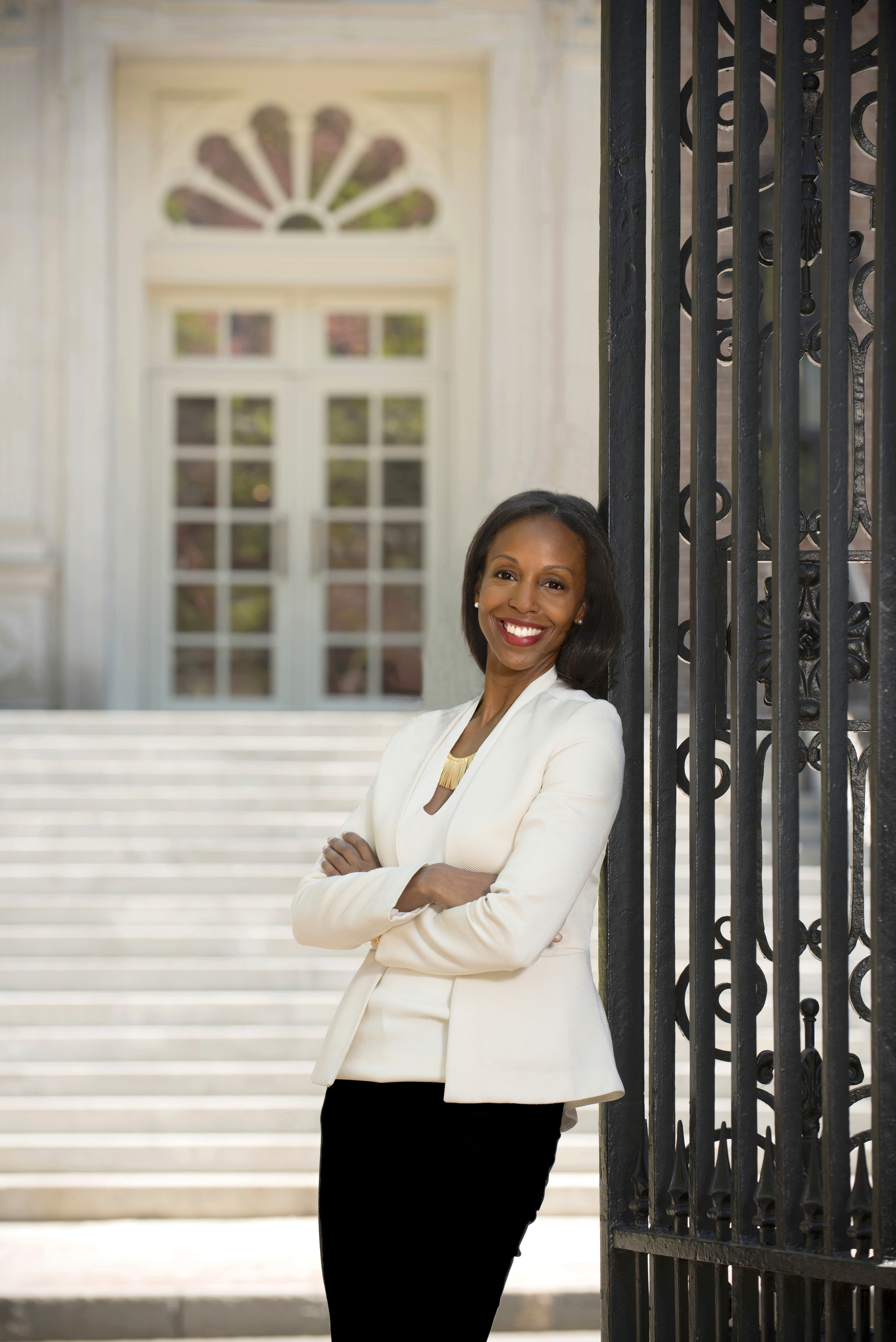 Sarah Lewis, Ph.D.
Sarah Lewis is the John L. Loeb Associate Professor of the Humanities and Associate Professor of African and African American Studies at Harvard University. She is the founder of Vision & Justice, a leading publishing and research initiative that serves as a key organizer, partner, and resource for artists, scholars, and leaders seeking to examine the foundational role of visual culture in America’s representational democracy. Lewis is also known for her landmark work on creativity and the gift of failure for innovation.
She has authored and edited over 60 publications including the award-winning book, The Unseen Truth: When Race Changed Sight in America (Harvard University Press, 2024); the bestseller, The Rise: Creativity, the Gift of Failure, and the Search for Mastery (Simon & Schuster, 2014); and the award-winning volumes Carrie Mae Weems (MIT Press, 2021) and “Vision & Justice” (Aperture, 2016), taught widely in universities in the United States and abroad and made required reading for incoming first-year students at New York University Tisch School of the Arts.
A frequent speaker at universities and conferences, her mainstage TED talk, Embrace the Near Win, has received 3.1 million views. She has delivered keynotes, talks and commencement addresses for many universities and organizations. As founder of Vision & Justice, Lewis has organized landmark convenings and founded a Vision & Justice Book Series, launched in partnership with Aperture. Her writing has been published in the New Yorker, The New York Times, Artforum, and the New York Review of Books, and her work has been the subject of profiles from Vogue to The Boston Globe to The New York Times.
Lewis’s awards and recognition include the American Book Award (2025) for The Unseen Truth, the Walter Channing Cabot Fellowship at Harvard University (2025), the Andrew Carnegie Fellowship (2022), the Arthur Danto/ASA Prize from the American Philosophical Association (2022), the Freedom Scholar Award from the Association for the Study of African American Life and History (2019), and the Infinity Award for Critical Writing and Research from the International Center of Photography (2017). She has received an honorary degree from Pratt Institute (2024) and was also asked to deliver the commencement address for Pratt Institute that year at Radio City Music Hall, following other commencement addresses for Capella University (2021) and Yale University School of Art (2019).
Before joining the faculty at Harvard, Lewis held curatorial positions at The Museum of Modern Art, New York and the Tate Modern, London. She also served as a Critic at Yale University School of Art. Lewis currently serves on the boards of Thames & Hudson Inc., Creative Time, and Civil War History journal and served on the Yale Corporation Committee on Honorary Degrees. Her research has received grants ranging from the Ford Foundation to the Whiting Foundation, and the Dorothy and Lewis B. Cullman Center for Scholars and Writers at the New York Public Library.
Lewis received her bachelor’s degree from Harvard University, an M. Phil from Oxford University, an M.A. from Courtauld Institute of Art, and her Ph.D. from Yale University. She lives in Cambridge, MA.
Dr. Terrance Jordan, Ed.D.- Assistant Superintendent of Family, Community, and School Leadership Springfield Public Schools District 186
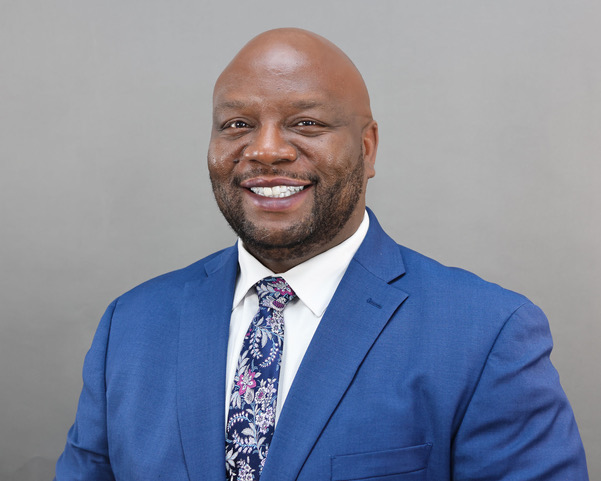 Dr. Terrance Jordan is a lifelong educator with nearly 23 years of service in Springfield Public Schools District 186. A native of Lexington, Mississippi, he is a graduate of Jacob J. McClain High School and holds a Bachelor of Science degree from Mississippi Valley State University.
Dr. Jordan began his career in District 186 as a kindergarten teaching assistant, an experience that ignited his passion for education and student success. He later served as a library media specialist and parent educator before earning his elementary teaching certificate from the University of Illinois at Springfield. Dr. Jordan has taught first and third grade, where his instructional excellence earned him the Horace Mann Rising Star Teaching Award.
Motivated to broaden his impact, Dr. Jordan earned a master’s degree in Educational Leadership and a post-master’s certificate in Educational Law. He served as guidance dean at Washington Middle School before being appointed principal of Black Hawk Elementary School, where he served for seven years. As principal, he focused on fostering a family-centered school culture, expanding mentoring opportunities, and strengthening community partnerships. His leadership was recognized with the Springfield Public Schools District 186 Administrator of the Year award and the Illinois State Board of Education Award of Excellence.
Dr. Jordan has held several district-level leadership roles, including Director of School Leadership and Family and Community Engagement. He currently serves as Assistant Superintendent of Family, Community, and School Leadership. He holds a Doctor of Education in Educational Leadership from Saint Louis University.
Beyond his professional responsibilities, Dr. Jordan is deeply engaged in the Springfield community. He has served as a youth coach and board member for numerous civic and nonprofit organizations, including the Springfield YMCA, Springfield Art Association, Memorial Behavioral Health, United Way of Central Illinois, Big Brothers Big Sisters, Sangamon CEO, and Springfield Ball Charter School. He is a graduate of the Greater Springfield Chamber of Commerce’s Leadership Springfield program and serves on the Heartland Continuum of Care Youth Homelessness Task Group, the Community Health Roundtable, and the Faith Coalition for the Common Good Education Task Force. He is also a member of Kappa Alpha Psi Fraternity, Inc.
Dr. Jordan’s recognitions include the Springfield Business Journal 40 Under 40, the MacArthur Boulevard Association Excellence in Education Award, University of Illinois Springfield Good as Gold Volunteer Award finalist, Parent Place Champion for Children Award, Springfield Art Association Outstanding Community Arts Advocate, and the Springfield Lincoln Library Dedication and Excellence in Community Contributions Award.
Dr. Jordan is the husband of Ashley Jenkins-Jordan and the father of Markayla Jordan. Guided by a leadership philosophy rooted in kindness, integrity, and service, he remains committed to ensuring every student has access to a high-quality education, meaningful relationships, and the support needed to succeed.
Dr. Curt Oldfield, Ed.D. - President, Lincoln Land Community College
Dr. Curt Oldfield is President of Lincoln Land Community College, bringing nearly 14 years of experience as President of Spoon River College and more than two decades of leadership in Illinois community colleges. Throughout his career, Dr. Oldfield has demonstrated a strong commitment to student success, workforce development, community engagement, and regional economic development.
Under his leadership at Spoon River College, Dr. Oldfield focused on increasing student retention, expanding workforce development opportunities, and building strategic partnerships that strengthened the college’s connection to the communities it serves. His career reflects a deep belief in the transformative role of community colleges in creating educational and economic opportunity.
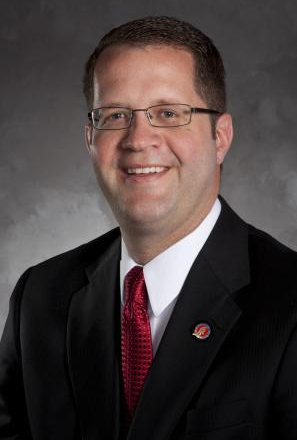 Dr. Oldfield began his career in education as an agriculture teacher at Roseville High School, where he also advised the FFA chapter and coached football and basketball. He later joined Spoon River College as a full-time agriculture faculty member and advanced to dean of instruction. He subsequently served as Vice President of Instruction at Northeast Iowa Community College before returning to Spoon River College as President.
Dr. Oldfield is a fellow of the Aspen Institute College Excellence Program and has served on the Commission on Student Success for the American Association of Community Colleges. His leadership and advocacy have been recognized with the Illinois Community College Trustees Association Advocacy Award. He was also named a Top 10 finalist in the Aspen Institute’s Community College Excellence Program and previously served as chair of the Illinois Council of Community College Presidents.
Dr. Oldfield earned his doctoral degree from Ferris State University, a master’s degree from the University of Illinois, and a bachelor’s degree from Illinois State University. His educational journey began at Spoon River College, where he earned his associate degree.
As President of Lincoln Land Community College, Dr. Oldfield brings extensive community college leadership experience and a longstanding commitment to ensuring students have access to high-quality education, career opportunities, and the resources needed to succeed.
Dr. Dan Mahony, Ph.D. — President, Southern Illinois University
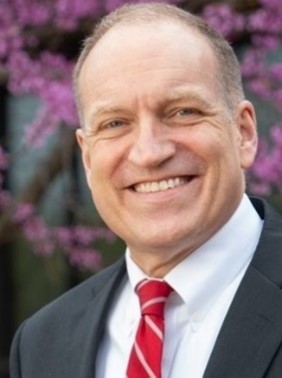
Having worked in higher education for over 25 years, Dr. Dan Mahony has served in roles from professor to president. He is a respected, consultative leader who has demonstrated the ability to bring a community together around shared goals which is why he was chosen to be the 10th President of Southern Illinois University beginning in March 2020.
Originally from Clinton, New Jersey, Dr. Mahony earned a B.S. in accounting from Virginia Tech, an M.S. in sport management from West Virginia University, and a Ph.D. in sport management from Ohio State University. He and his wife Laura have two children, Gavin and Elena.
Before his academic career, Dr. Mahony worked in both public accounting and intercollegiate athletics. He is an active researcher in the areas of sport consumer behavior and intercollegiate athletics.
Dr. Mahony has received many awards for his work. Most recently, he was the 2020 recipient of the Charles Whitcomb Service Award given by the Minority Opportunities Athletic Association (MOAA) which recognizes individuals who foster diversity and inclusion within the intercollegiate athletics community.
AI Panel
AI Panel
President's Panel
President's Panel
Legislative Panel
Legislative Panel
Spoken Word/Creative Expression Session
Spoken Word/Creative Expression Session
Symposium Data Point
Black, Latino, and Native American students account for only 16% of degrees in Illinois's high-cost academic programs, compared with 23% of degrees in other fields. Many of these high-cost programs are in STEM and other specialized fields.
Source: Illinois Board of Higher Education, Technical Modeling Workgroup, 2023.
Preparation in mathematics remains a major gateway issue for STEM.
ICCB reports that 41% of Illinois high school graduates entering community college as full-time freshmen require remedial mathematics. ICCB specifically distinguishes a STEM mathematics pathway for students pursuing science, technology, engineering, and mathematics because those programs require advanced algebra and often calculus.
Source: Illinois Community College Board, Transitional Math
Women remain significantly underrepresented in engineering.
Women represent only about 22% of undergraduate engineering students, with representation in electrical and mechanical engineering often 15% or less.
Source: Illinois Board of Higher Education, New Units of Instruction at Public Universities, November
Black undergraduate enrollment has declined significantly in Illinois.
African American undergraduate enrollment in Illinois fell 35% between 2013 and 2022, from approximately 107,000 students to 70,000 students.
Source: IPEDS Data and the Illinois Board of Higher Education, A Thriving Illinois: Equity Gaps Facing African American Students.
Rural students are more likely to attend community colleges.
Among Illinois students from rural communities who go to college, a larger share enroll in two-year colleges than students from non-rural communities. The latest comparable IBHE/ISBE data show 62% of rural college-going students attending two-year institutions compared with 43% of non-rural students
Source: Illinois Board of Higher Education, Underrepresented Groups Report.
Enrollment declines have been especially significant among low-income students.
Illinois had 36.3% fewer Pell-eligible undergraduate students in 2021 than in 2013, compared with a 22.1% decline among non-Pell students. IBHE data consistently show that low-income students face greater barriers to entering and remaining in higher education than their non-Pell peers.
Source: Illinois Board of Higher Education, Underrepresented Groups Report and A Thriving Illinois.
Low-income students are less likely to complete a public university degree.
The most recent completion series reported in IBHE’s 2023 report shows a six-year completion rate of approximately 50.5% for Pell recipients at Illinois public universities, compared with 73.6% for students who did not receive Pell Grants.
Source: IPEDS Graduation Rate data, as reported by the Illinois Board of Higher Education in the 2023 Underrepresented Groups Report.
Black students remain underrepresented in Advanced Placement courses.
In 2022, Black students represented 14.3% of Illinois public high school graduates but only 6.6% of students participating in AP courses. White students represented 51% of graduates and 53% of AP participants.
Source: Illinois State Board of Education 2022 Report Card, as reported by the Illinois Board of Higher Education in the 2023 Underrepresented Groups Report.
Racial gaps in college completion remain significant.
IBHE continues to identify degree completion as a major equity challenge, with Black and Latino students completing college at lower rates than White students at Illinois public universities.
Source: Illinois Board of Higher Education, A Thriving Illinois and Underrepresented Groups Report.
College attainment remains substantially lower in rural Illinois.
IBHE data show that only 17.1% of adults age 25 and older in completely rural Illinois counties hold a bachelor’s degree or higher, compared with 37.4% in mostly urban counties.
Source: 2021 American Community Survey 5-Year Estimates, as reported by the Illinois Board of Higher Education in the 2022 Underrepresented Groups Report.

Contact
Events and Outreach
- Phone:
- (618) 536-7751
- Email:
- conferenceservices@siu.edu